How To Make Fire Starters
There’s nothing quite like the warmth and comfort of a crackling fire, especially when you’re out in the wilderness or facing a power outage.
But getting that fire started can sometimes be a real challenge, even with good kindling.
I’ve been in situations where a reliable fire starter made all the difference, turning a frustrating struggle into a cozy success. This guide shares proven methods for making your own.
Quick Overview
This guide will show you how to craft several types of effective fire starters using common household materials. You’ll learn to create reliable aids for igniting fires quickly and efficiently.
- Time needed: 30-60 minutes for a batch
- Difficulty: Beginner
- What you’ll need: Wax, cotton, petroleum jelly, dryer lint, egg cartons, old candles.
Step-by-Step Instructions
Step 1: Gather Your Materials
Before you begin, collect all the necessary items. Having everything ready streamlines the process and prevents interruptions.
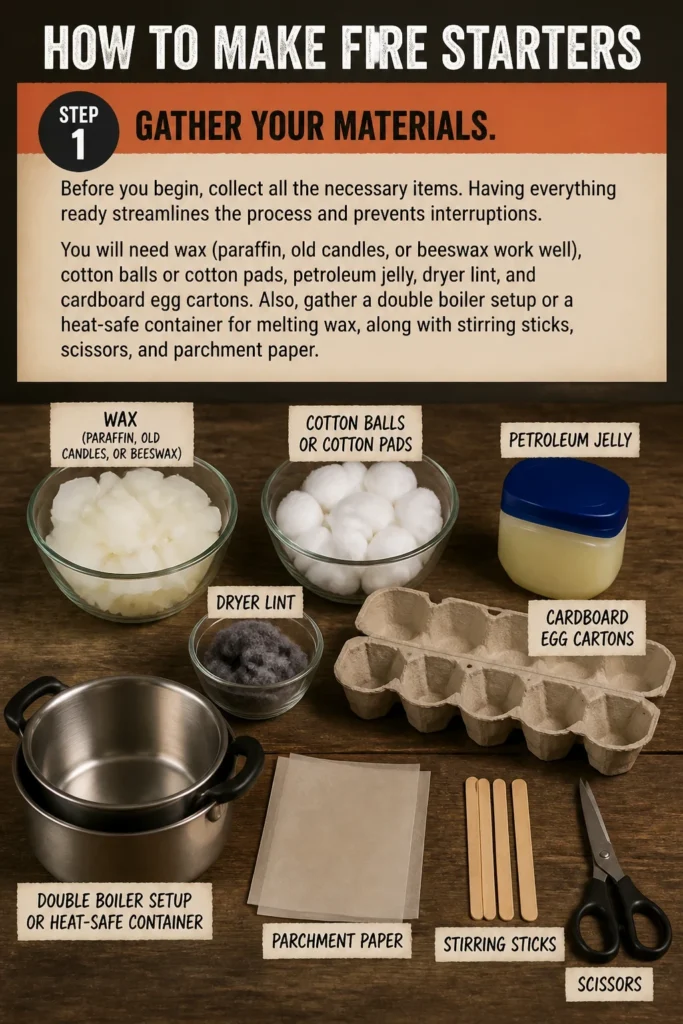
You will need wax (paraffin, old candles, or beeswax work well), cotton balls or cotton pads, petroleum jelly, dryer lint, and cardboard egg cartons. Also, gather a double boiler setup or a heat-safe container for melting wax, along with stirring sticks, scissors, and parchment paper.
Step 2: Prepare Your Work Area
Safety is paramount when working with heat and flammable materials. Choose a well-ventilated space, ideally outdoors or in a garage.
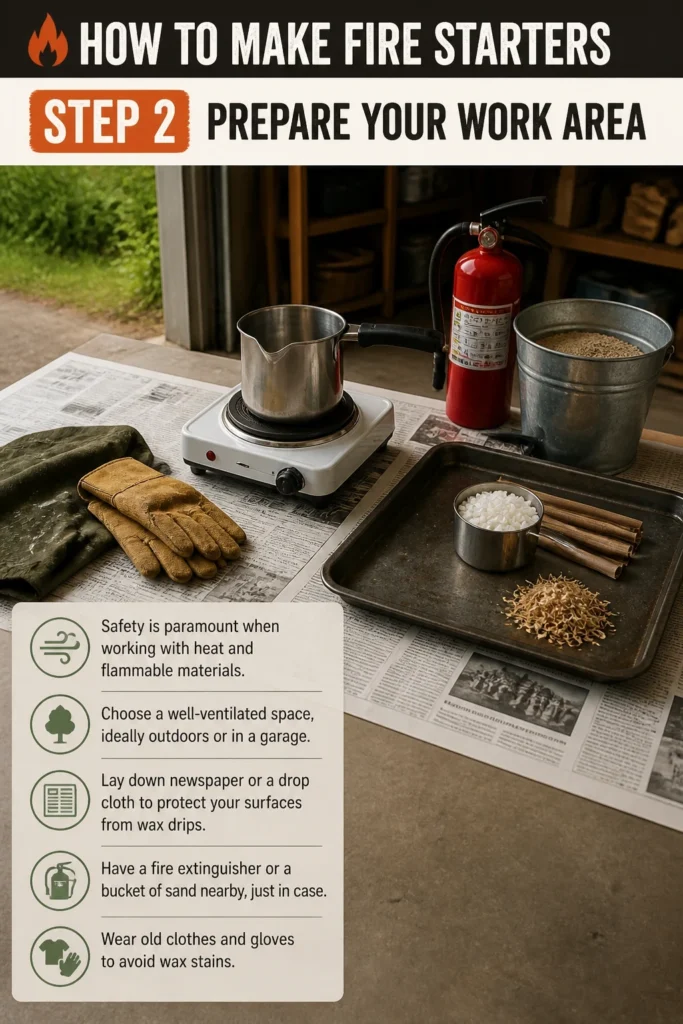
Lay down newspaper or a drop cloth to protect your surfaces from wax drips. Have a fire extinguisher or a bucket of sand nearby, just in case. Wear old clothes and gloves to avoid wax stains.
Step 3: Melt the Wax Safely
Melting wax requires careful attention to prevent accidents. Never melt wax directly over an open flame or high heat.
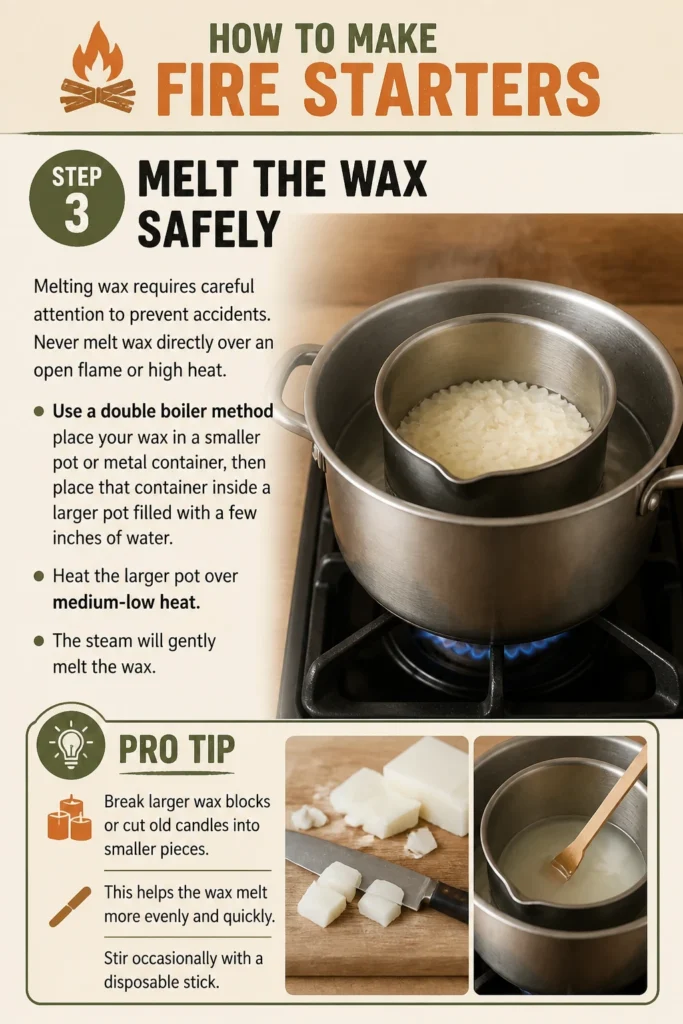
Use a double boiler method: place your wax in a smaller pot or metal container, then place that container inside a larger pot filled with a few inches of water. Heat the larger pot over medium-low heat. The steam will gently melt the wax.
Pro Tip: Break larger wax blocks or cut old candles into smaller pieces. This helps the wax melt more evenly and quickly. Stir occasionally with a disposable stick.
Step 4: Create Waxed Cotton Pads or Discs
Waxed cotton is a classic and highly effective fire starter. It burns hot and for a good duration.
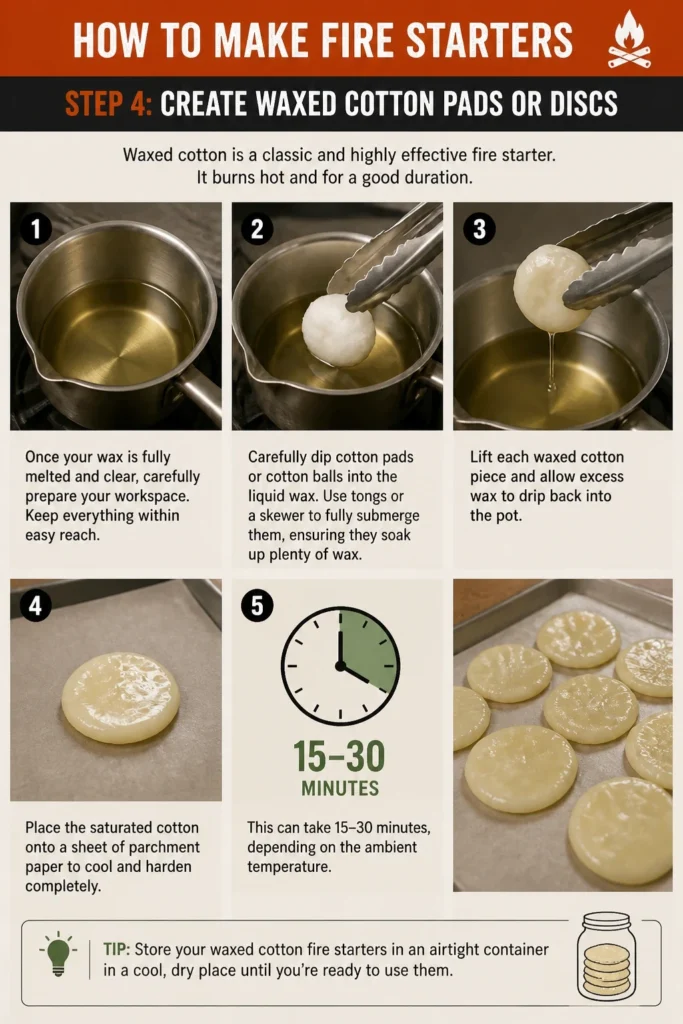
Once your wax is fully melted and clear, carefully dip cotton pads or cotton balls into the liquid wax. Use tongs or a skewer to fully submerge them, ensuring they soak up plenty of wax.
Lift each waxed cotton piece and allow excess wax to drip back into the pot. Place the saturated cotton onto a sheet of parchment paper to cool and harden completely. This can take 15-30 minutes, depending on the ambient temperature.
Step 5: Make Dryer Lint & Egg Carton Starters
This method repurposes common household waste into powerful fire starters. It’s an excellent way to be resourceful.
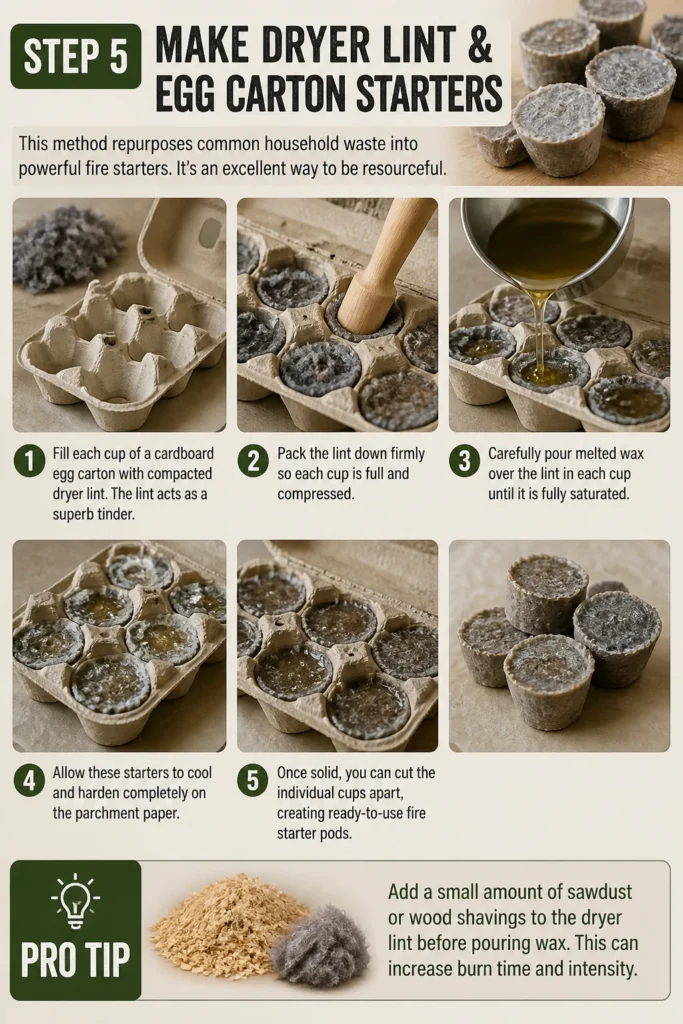
Fill each cup of a cardboard egg carton with compacted dryer lint. The lint acts as a superb tinder. Once the cups are filled, carefully pour melted wax over the lint in each cup until it is fully saturated.
Allow these starters to cool and harden completely on the parchment paper. Once solid, you can cut the individual cups apart, creating ready-to-use fire starter pods.
Pro Tip: Add a small amount of sawdust or wood shavings to the dryer lint before pouring wax. This can increase burn time and intensity.
Step 6: Craft Petroleum Jelly Cotton Balls
Petroleum jelly cotton balls are incredibly simple to make and provide a long-burning flame. They are also very compact.
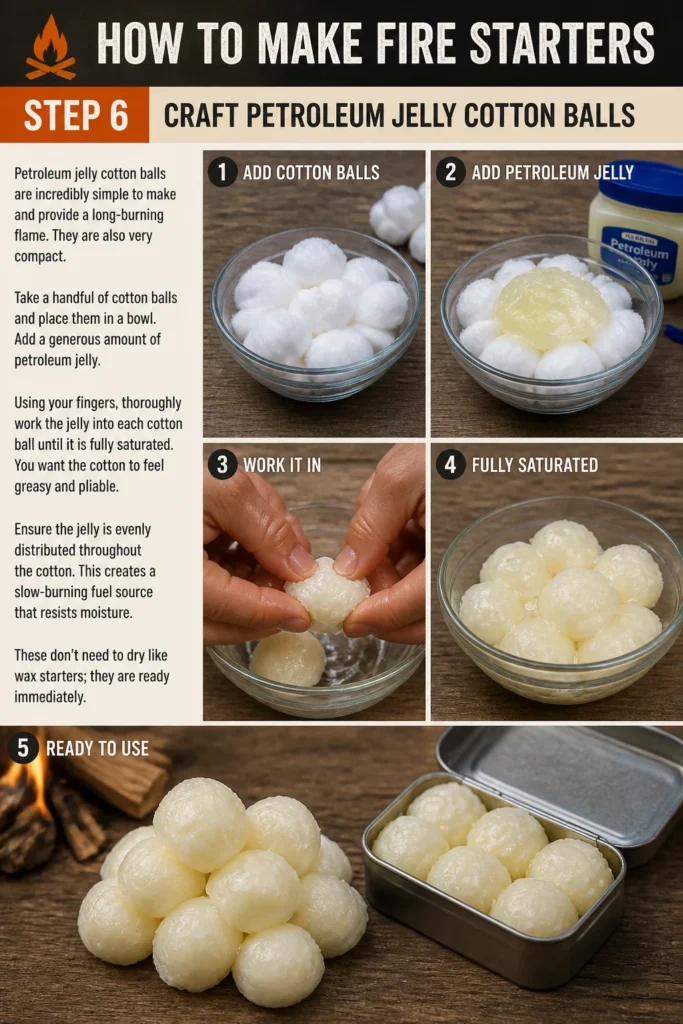
Take a handful of cotton balls and place them in a bowl. Add a generous amount of petroleum jelly. Using your fingers, thoroughly work the jelly into each cotton ball until it is fully saturated. You want the cotton to feel greasy and pliable.
Ensure the jelly is evenly distributed throughout the cotton. This creates a slow-burning fuel source that resists moisture. These don’t need to dry like wax starters; they are ready immediately.
Step 7: Allow for Curing and Drying
Proper drying and curing are essential for optimal performance, especially for wax-based starters. Rushing this step can lead to disappointing results.
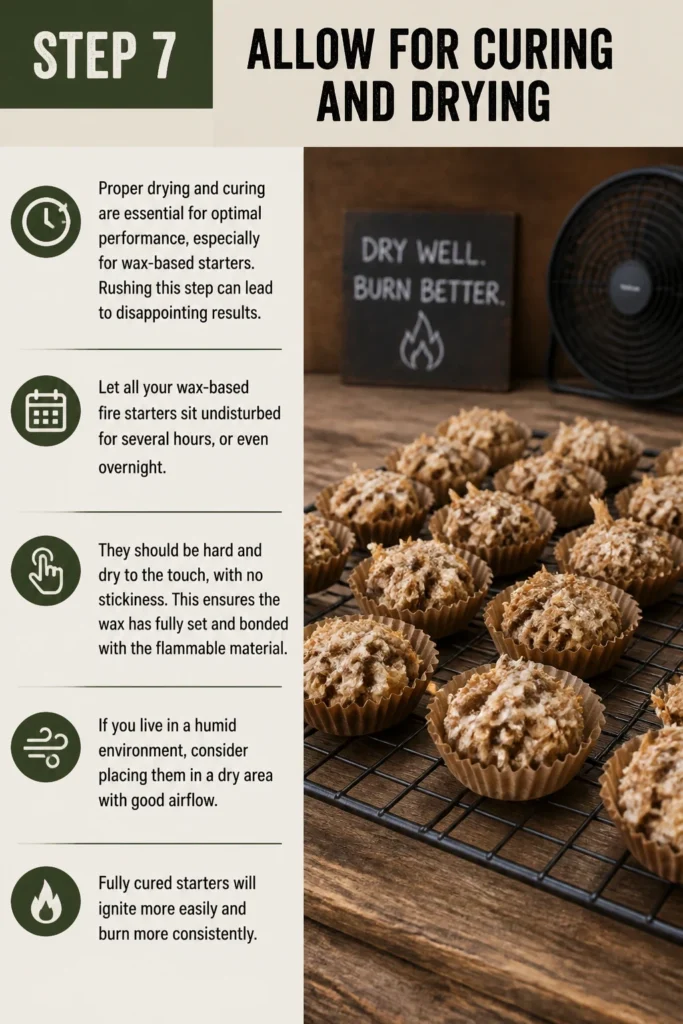
Let all your wax-based fire starters sit undisturbed for several hours, or even overnight. They should be hard and dry to the touch, with no stickiness. This ensures the wax has fully set and bonded with the flammable material.
If you live in a humid environment, consider placing them in a dry area with good airflow. Fully cured starters will ignite more easily and burn more consistently.
Step 8: Store Your Fire Starters Properly
Correct storage protects your homemade fire starters from moisture and degradation. It also keeps them ready for when you need them most.
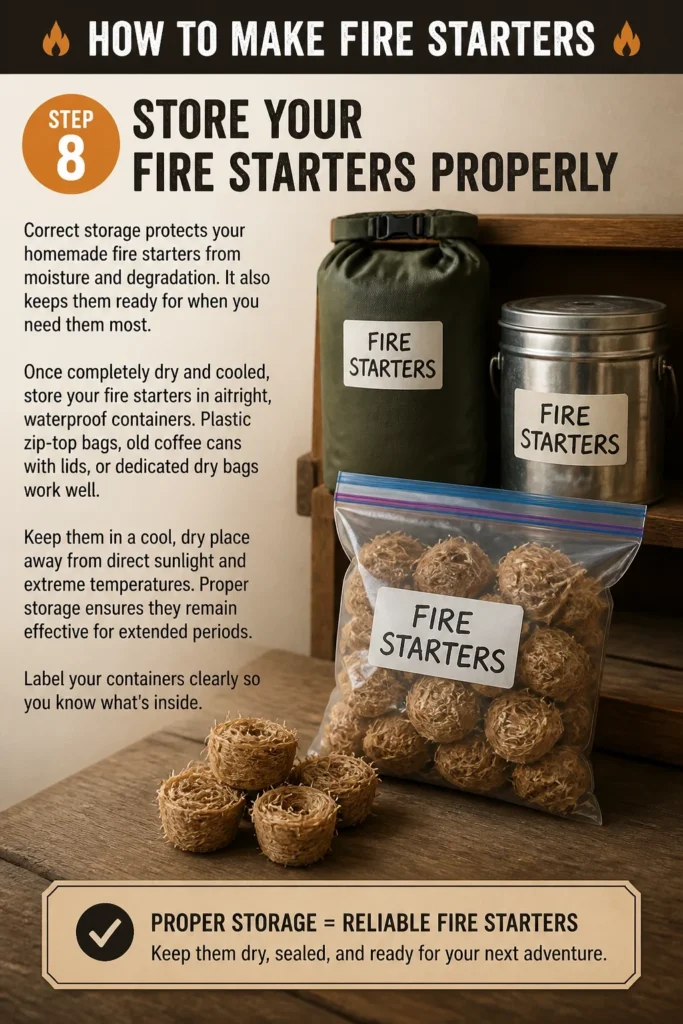
Once completely dry and cooled, store your fire starters in airtight, waterproof containers. Plastic zip-top bags, old coffee cans with lids, or dedicated dry bags work well. Keep them in a cool, dry place away from direct sunlight and extreme temperatures.
Proper storage ensures they remain effective for extended periods. Label your containers clearly so you know what’s inside.
Common Mistakes to Avoid
Using Too Much or Too Little Wax
Finding the right balance of wax is crucial for your fire starters. Too much wax can smother the tinder, making it difficult to ignite.
Conversely, too little wax means the starter will burn out too quickly, failing to sustain a flame long enough to catch your kindling. Aim for full saturation of your tinder material without creating a solid, impenetrable block of wax.
Not Allowing Proper Drying Time
Impatience is a common pitfall when making wax-based fire starters. Pulling them off the parchment paper too soon can result in sticky, misshapen starters.
More importantly, if the wax hasn’t fully hardened, the starter may not ignite as easily or burn as efficiently. Give them ample time to cure completely, even if it means waiting overnight.
Improper Storage
Leaving fire starters exposed to the elements defeats their purpose. Moisture is the enemy of any fire starter, making it difficult or impossible to ignite.
Storing them in open containers allows them to absorb humidity from the air. Always use airtight, waterproof containers to protect your creations and ensure they are ready for use when needed.
Overlooking Safety Precautions
Working with melted wax and open flames carries inherent risks. Neglecting safety can lead to burns or even a house fire.
Always use a double boiler, never leave melting wax unattended, and keep a fire extinguisher or baking soda nearby. Ensure good ventilation to avoid inhaling wax fumes, which can be irritating.
Troubleshooting
Fire Starter Won’t Light
If your fire starter struggles to ignite, the issue often lies with moisture or density. Check if the starter feels damp; if so, it needs more drying time.
For wax-based starters, you might have used too much wax, creating a dense core that’s hard to catch. Try roughing up the edges or fluffing the cotton to expose more fibers for easier ignition.
Fire Starter Burns Too Quickly
A fire starter that flames out too fast hasn’t done its job. This usually indicates insufficient fuel or a lack of density.
For waxed items, ensure the tinder was fully saturated with wax. For petroleum jelly cotton balls, you might need to work in more jelly. A good fire starter should burn for several minutes, giving your kindling time to catch.
Messy Production Process
Working with wax can certainly get messy, but it doesn’t have to be a disaster. If you find yourself with drips and spills everywhere, reconsider your setup.
Lay down plenty of newspaper or a large drop cloth. Use dedicated tools for wax work that you don’t mind getting dirty. Work slowly and deliberately, and always have paper towels ready for immediate cleanup of small drips.
Key Takeaways
- Always prioritize safety when melting wax and handling flammable materials.
- Homemade fire starters are cost-effective and highly reliable for igniting fires.
- Experiment with different materials like dryer lint, cotton, and petroleum jelly to find what works best for you.
- Properly saturate your tinder with wax or petroleum jelly for a sustained burn.
- Allow wax-based starters to dry and cure completely for optimal performance.
- Store your finished fire starters in airtight, waterproof containers to protect them from moisture.
Frequently Asked Questions
How long do homemade fire starters last?
When stored properly in airtight, waterproof containers, homemade fire starters can last for many years. The wax acts as a preservative, protecting the flammable material from degradation and moisture. Petroleum jelly cotton balls also have an excellent shelf life.
Can I use old candles for wax?
Absolutely, old candles are an excellent source of wax for making fire starters. Simply remove the wick remnants and melt the candle wax using the double boiler method. This is a fantastic way to recycle and save money.
Are they safe to burn indoors?
Homemade fire starters are generally intended for igniting fires in fireplaces, wood stoves, or outdoor fire pits. They produce a significant flame and some smoke. Always ensure proper ventilation and never use them in enclosed spaces without a suitable flue or exhaust system, just as you would with any fire.
What’s the best material for a fire starter?
The “best” material often depends on personal preference and available resources. Wax-soaked cotton pads or dryer lint in egg cartons offer a long, hot burn. Petroleum jelly cotton balls are incredibly compact and waterproof. Each type has its strengths, making a variety useful for different situations.
Our Top Recommended Finds
- Paraffin Wax Blocks: An affordable and consistent wax source for making large batches.
- Cotton Pads/Balls: Versatile and readily available for both waxed and petroleum jelly starters.
- Waterproof Storage Container: Essential for keeping your finished fire starters dry and ready for any adventure.
Light Up Your Next Adventure
Now you have the knowledge and steps to create your own reliable fire starters. No more struggling with damp kindling or unreliable matches.
Take these skills, gather your materials, and start crafting. The satisfaction of a self-ignited fire is truly rewarding.