How To Reuse Plastic Bottles
I remember looking at my overflowing recycling bin and feeling a pang of guilt over the sheer volume of plastic bottles.
That’s when I started exploring creative ways to give them a second life, transforming waste into useful items around my home.
This guide shares practical, hands-on methods I’ve personally used to turn those discarded bottles into valuable resources, helping you reduce waste and save money.
Quick Overview
This guide will equip you with the knowledge to transform everyday plastic bottles into functional and creative items.
You’ll learn preparation techniques, various project ideas, and essential safety tips to make the most of your plastic bottle reuse efforts.
- Time needed: 15 minutes to several hours (depending on project)
- Difficulty: Beginner
- What you’ll need: Plastic bottles, scissors, craft knife, cleaning supplies, various craft materials
Step-by-Step Instructions
Step 1: Gather and Clean Your Bottles
Begin by collecting a variety of plastic bottles from your household. Look for different sizes and shapes, as these will offer more versatility for your projects.
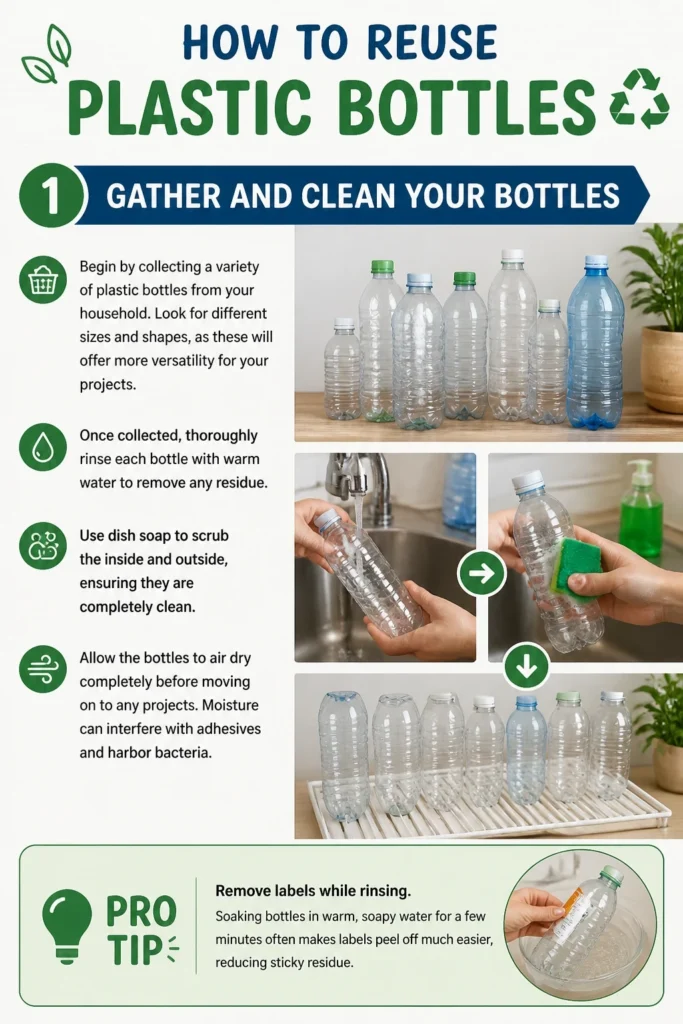
Once collected, thoroughly rinse each bottle with warm water to remove any residue. Use dish soap to scrub the inside and outside, ensuring they are completely clean.
Allow the bottles to air dry completely before moving on to any projects. Moisture can interfere with adhesives and harbor bacteria.
Pro Tip: Remove labels while rinsing. Soaking bottles in warm, soapy water for a few minutes often makes labels peel off much easier, reducing sticky residue.
Step 2: Carefully Cut and Shape Bottles
For many reuse projects, you’ll need to cut your plastic bottles. Always use a sharp craft knife or sturdy scissors, taking extreme caution to prevent injury.
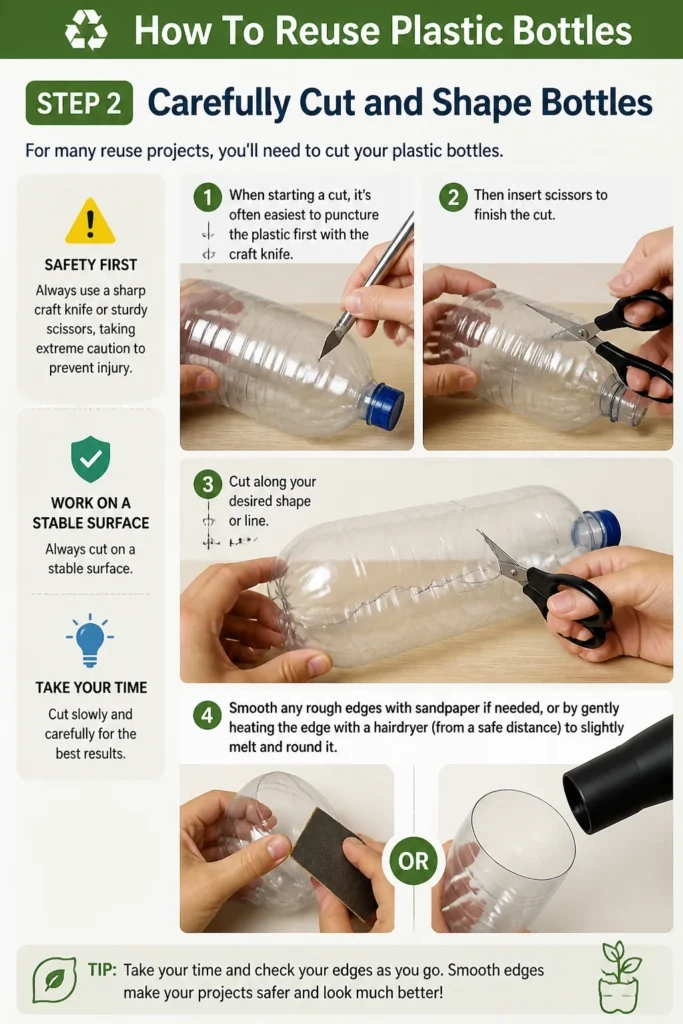
When starting a cut, it’s often easiest to puncture the plastic first with the craft knife, then insert scissors to finish the cut. Always cut on a stable surface.
Smooth any rough edges with sandpaper if needed, or by gently heating the edge with a hairdryer (from a safe distance) to slightly melt and round it.
Step 3: Create Simple Storage Containers
Plastic bottles make excellent organizers for small items. Cut the top section off a larger bottle, leaving a sturdy base.
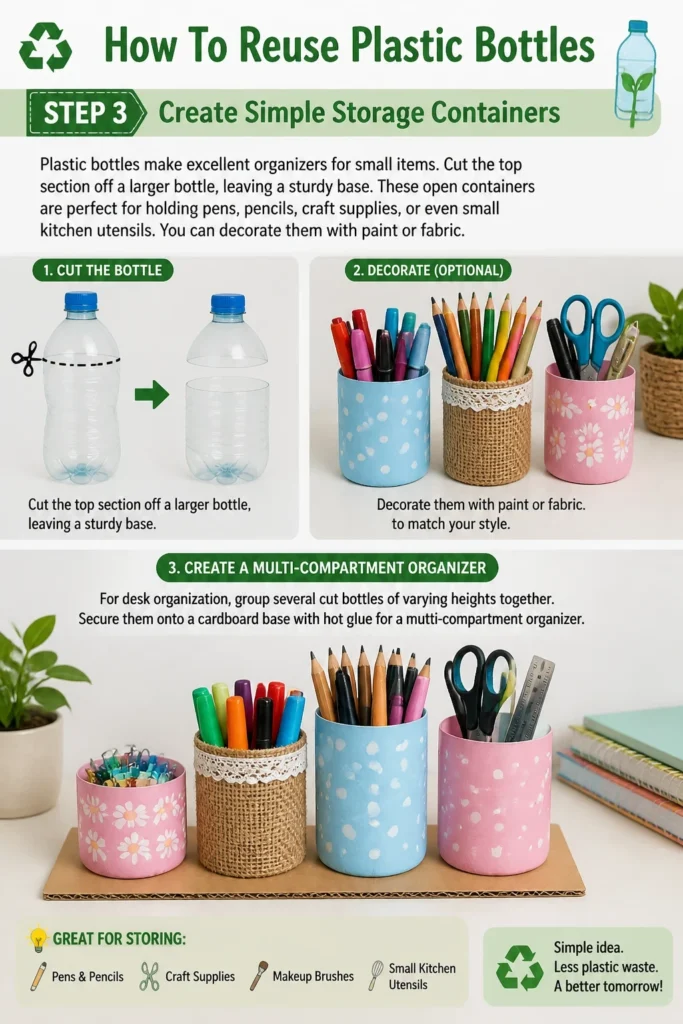
These open containers are perfect for holding pens, pencils, craft supplies, or even small kitchen utensils. You can decorate them with paint or fabric.
For desk organization, group several cut bottles of varying heights together. Secure them onto a cardboard base with hot glue for a multi-compartment organizer.
Step 4: Design Self-Watering Planters
Transform plastic bottles into innovative self-watering planters for herbs or small plants. Cut a bottle in half, separating the top and bottom.
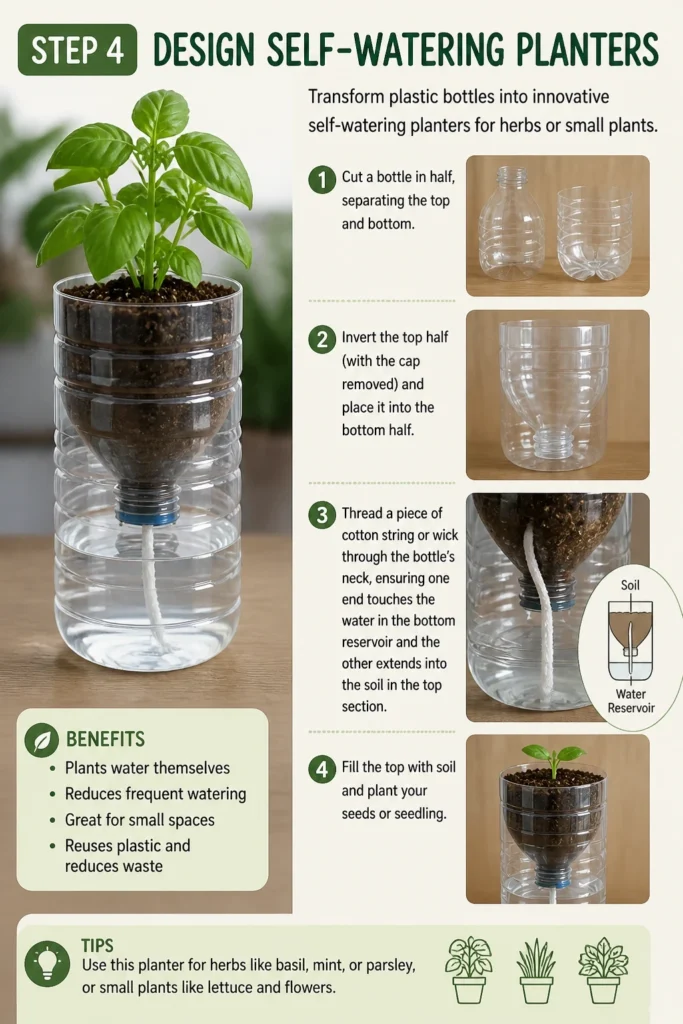
Invert the top half (with the cap removed) and place it into the bottom half. The neck of the bottle should sit inside the base.
Thread a piece of cotton string or wick through the bottle’s neck, ensuring one end touches the water in the bottom reservoir and the other extends into the soil in the top section. Fill the top with soil and plant your seeds or seedling.
Step 5: Fashion a DIY Bird Feeder
Give birds a treat by turning a plastic bottle into a feeder. Cut two small holes on opposite sides near the bottom for perches, and two larger holes just above them for dispensing seeds.
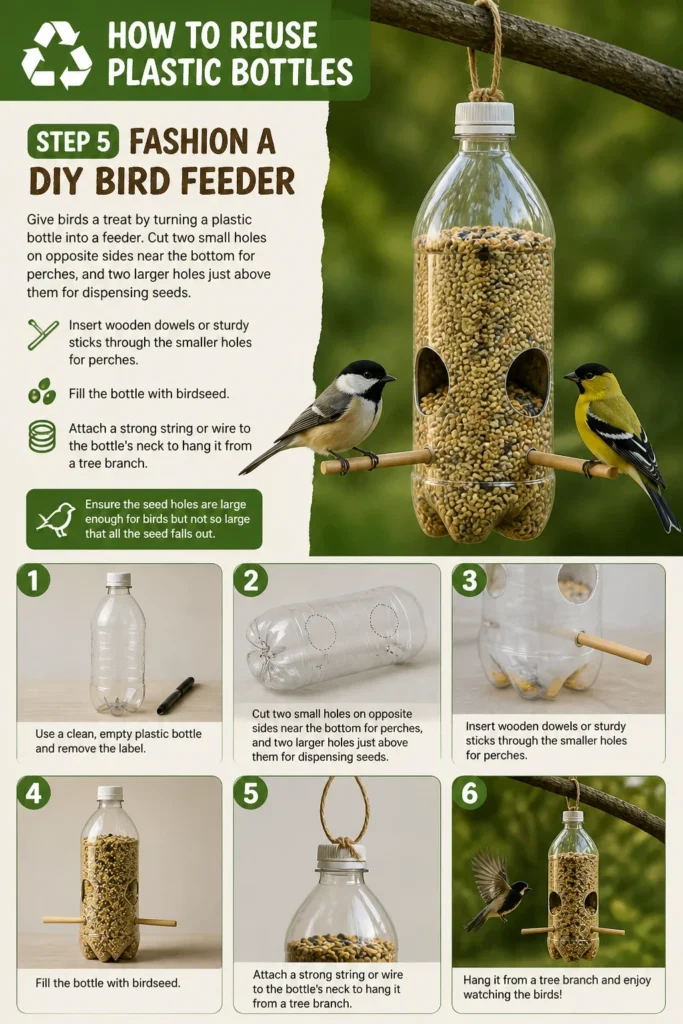
Insert wooden dowels or sturdy sticks through the smaller holes for perches. Fill the bottle with birdseed.
Attach a strong string or wire to the bottle’s neck to hang it from a tree branch. Ensure the seed holes are large enough for birds but not so large that all the seed falls out.
Step 6: Make a Practical Scoop or Funnel
Large plastic bottles can be easily converted into useful scoops or funnels. To make a scoop, cut the bottom of a milk jug or similar bottle at an angle, leaving the handle intact.
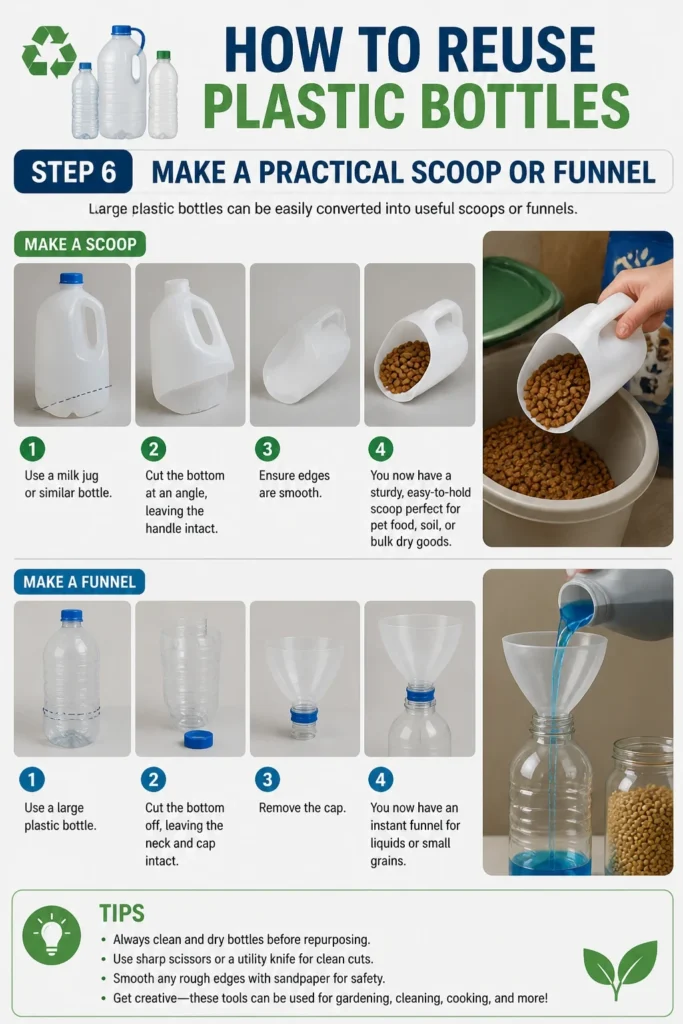
This creates a sturdy, easy-to-hold scoop perfect for pet food, soil, or bulk dry goods. Ensure edges are smooth.
For a funnel, cut the bottom off a bottle, leaving the neck and cap intact. Remove the cap, and you have an instant funnel for liquids or small grains.
Step 7: Craft a Piggy Bank
Encourage saving with a homemade piggy bank. Cut a slit near the top of a cleaned plastic bottle, large enough for coins and folded bills.
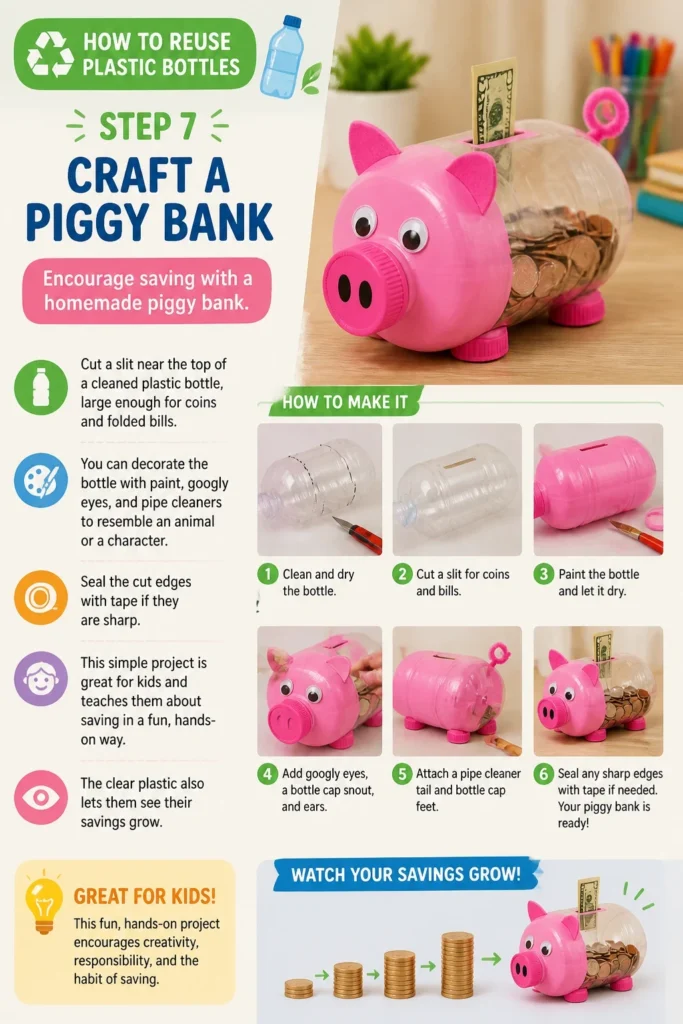
You can decorate the bottle with paint, googly eyes, and pipe cleaners to resemble an animal or a character. Seal the cut edges with tape if they are sharp.
This simple project is great for kids and teaches them about saving in a fun, hands-on way. The clear plastic also lets them see their savings grow.
Common Mistakes to Avoid
Not Cleaning Bottles Thoroughly
Failing to completely clean and dry bottles before reuse can lead to unpleasant odors or mold growth, especially if used for storage or crafts. Any residue can also interfere with paint or glue adhesion.
Always take the time to wash bottles with soap and water, rinsing thoroughly. Allow them to air dry completely, ideally overnight, to prevent moisture issues.
Unsafe Cutting Practices
Using dull tools or rushing the cutting process can result in jagged edges, uneven cuts, or even serious injury. Plastic can be slippery and difficult to cut cleanly.
Always use a sharp craft knife or sturdy scissors. Work on a stable surface, away from your body, and consider wearing protective gloves. Smooth any sharp edges with sandpaper or a gentle heat source.
Using Bottles for Food After Non-Food Uses
Once a plastic bottle has been repurposed for non-food items, especially if it’s been painted, glued, or used for chemicals, it should not be reused for food or drink storage. Plastic can absorb substances and release chemicals.
Designate bottles for specific purposes. If a bottle has been used for crafts or non-food storage, keep it in that role. For food-related reuse, ensure the bottle has only ever contained food and has been thoroughly sanitized.
Overambitious Projects Too Soon
Attempting highly complex or intricate projects before mastering basic cutting and crafting techniques can lead to frustration and wasted materials. Some designs require specific tools or advanced skills.
Start with simple projects like storage containers or basic planters to build confidence and skill. Gradually move on to more complex creations as you become more comfortable working with the material.
Troubleshooting
Bottle Edges Are Rough or Sharp
Even with careful cutting, plastic edges can sometimes remain uneven or sharp, posing a safety risk. This often happens with thicker plastics or when using slightly dull tools.
To smooth rough edges, gently rub them with fine-grit sandpaper until they are soft to the touch. Alternatively, you can carefully pass a lighter flame or a hairdryer (on a low setting, from a distance) along the edge to slightly melt and round it, but exercise extreme caution to avoid burning the plastic or yourself.
Craft Projects Don’t Hold Together
If your bottle crafts are falling apart, the adhesive might not be strong enough for plastic, or the surfaces weren’t clean enough. Plastic can be a tricky material for some glues.
Ensure bottles are perfectly clean and dry before applying any adhesive. Use glues specifically designed for plastic or a hot glue gun, which often provides a stronger, faster bond. For added strength, consider reinforcing joints with tape before gluing or using mechanical fasteners where appropriate.
Bottles Lose Their Shape Easily
Some thinner plastic bottles can be prone to collapsing or losing their shape, especially when cut or filled. This can be frustrating if you need a sturdy structure.
For projects requiring more rigidity, choose bottles made from thicker plastic, such as those used for milk or detergent. You can also reinforce the inside of a bottle with cardboard inserts or by filling it partially with sand or pebbles for added stability, depending on the project.
Key Takeaways
- Always prioritize safety by using sharp tools and protecting your hands during cutting.
- Thoroughly clean and dry all plastic bottles to ensure hygiene and proper adhesion for crafts.
- Start with simple projects to build confidence and skill before tackling more complex designs.
- Plastic bottles can be transformed into practical storage, decorative items, or gardening aids.
- Avoid using bottles for food once they’ve been repurposed for non-food items or altered.
- Embrace creativity and experiment with different bottle shapes and sizes for diverse reuse possibilities.
Frequently Asked Questions
Is it safe to reuse all types of plastic bottles?
Most common plastic bottles (like PET #1 for water/soda and HDPE #2 for milk/detergent) are generally safe for reuse, especially for non-food purposes. However, avoid reusing bottles that contained harsh chemicals or have been damaged, as they might leach substances. Always check the recycling symbol for plastic type.
How many times can I reuse a plastic bottle?
The number of times you can reuse a plastic bottle depends on its original purpose, the plastic type, and how you’re reusing it. For non-food items, you can reuse them indefinitely as long as they remain structurally sound and clean. For food contact, it’s generally best to limit reuse to a few times with thorough cleaning, as plastic can degrade over time.
Can I put hot liquids in a reused plastic bottle?
It’s generally not recommended to put hot liquids in plastic bottles that weren’t specifically designed for them. Heat can cause some plastics to degrade and potentially leach chemicals into the liquid. Stick to cold or room-temperature contents unless the bottle is clearly marked as heat-safe.
What if I don’t have a craft knife for cutting?
While a craft knife offers precision, sturdy utility scissors can also work for many plastic bottle cutting tasks, especially for thinner plastics. For starting cuts, you might carefully use the tip of a pair of scissors or a small, sharp household knife to make an initial puncture, then switch to scissors for the main cut. Always prioritize safety and a stable cutting surface.
Our Top Recommended Finds
- Heavy-Duty Craft Scissors: Essential for clean cuts through various plastic thicknesses, reducing jagged edges.
- Precision Craft Knife Set: Offers different blade types for intricate cuts and scoring, improving project accuracy.
- Low-Temp Hot Glue Gun: Provides a strong, quick-drying bond for plastic without melting it, perfect for assembling crafts.
Embrace Your Inner Innovator
You now have a toolkit of practical methods to give plastic bottles a vibrant second life.
From organizing your desk to nurturing new plants, each reused bottle contributes to a more sustainable lifestyle and a cleaner planet.
Don’t just read about it; pick up a bottle, choose a project, and start creating today.